I was halfway through painting my face when Casey's hands settled on my waist from behind.
"We don't have time," I said, catching her reflection in the vanity mirror. "The parade starts in three hours and I still need-"
"We have time," she murmured, her mouth finding the spot below my ear that always turned my thoughts to static. Her fingers traced the curves of my waist, then moved to the ties of my robe. "You look too good to leave alone."
"Casey, I'm only half done with makeup, and if you mess up my hair-"
"I'll be careful," she promised, though her hands were already pushing silk off my shoulders. "And you can fix whatever gets messed up."
The casual assumption that I'd simply redo whatever got undone irritated me, but Casey was already guiding me away from the vanity with the confidence of someone who knew I wouldn't actually refuse. Three months of this dynamic had taught us both that my protests were more ritual than resistance.
When she pressed me back against the unmade bed, Victoria's silicone masterpieces bounced against my chest with their familiar weight. The adhesive had been applied fresh yesterday morning, creating the seamless illusion that would last another two weeks. I'd stopped thinking about them as temporary modifications and started thinking of them as just another body part I had to navigate-artificial, expensive, but undeniably mine to live with.
But underneath the prosthetics, though, real changes were happening with surprising speed. Months of hormones had created genuine A-cup development beneath the prosthetics-small but unmistakable breast tissue with prominent nipples that responded to touch with electric sensitivity. The fake tits now sat on top of increasingly real feminine anatomy, a Russian nesting doll of gender fuckery.
The changes went beyond obvious feminization. My skin had become softer, almost translucent as tissue paper in places. Fat had migrated from my gut to my hips and thighs, creating curves that no longer required Victoria's engineering. My face had softened, the brutal angles of my jaw melting into something that needed less paint to pass as female. Most disturbing was how my emotional landscape had shifted-tears came like summer storms now, anger felt different, and sexual response had become this complex, overwhelming thing that left me gasping and confused.
Casey's mouth moved down my neck while her hands explored curves that were increasingly my own. The combination of artificial enhancement and genuine hormone-driven development had created something neither fully fake nor entirely natural. When she touched the prosthetics, I felt pressure and movement when they pressed into the real breast tissue growing underneath, sending electric sensations that made me arch like a live wire.
"You're so responsive now," Casey breathed against my collarbone. "The way you react to everything..."
She wasn't wrong. The person who'd barely registered physical sensation beyond basic hydraulics had been replaced by someone who writhed and made sounds I didn't recognize as my own voice. Whether it was the estrogen rewiring my nervous system or the psychological mindfuck of living as someone else's fantasy, my body had become this hypersensitive instrument that responded to her touch like I was made for it.
The bed creaked as Casey positioned herself above me, taking control with the same authority she brought to everything else in our relationship. As she guided me inside her, I found myself pinned beneath her weight, completely at her mercy as she set a rhythm that left me gasping. Every movement was hers to dictate while I lay helpless, following her pace, my breathing ragged as she took exactly what she wanted from my transformed body.
Twenty minutes later, I lay catching my breath while she showered, my carefully applied foundation smeared across the pillowcase like evidence of my surrender. Across the room, the red dress Casey had pulled from the closet for me to wear to the July 4th parade waited on its hanger. Red fit-and-flare with dramatic puffed sleeves, a structured V-neckline, and a full skirt that hit mid-thigh, it was pure campaign theater disguised as patriotic fashion-1950s glamour designed for maximum visual impact.
Summer had introduced new challenges to my elaborate feminine charade. While I still wore the structured sheath dresses for office work, Victoria had introduced a new category of styling for campaign events-vintage-inspired pieces designed for maximum visual impact. Fit-and-flare dresses with cinched waists, halter tops that emphasized my bust, A-line skirts that swished with every step. Theatrical silhouettes that photographed beautifully under summer sun. Where my professional wardrobe maintained some dignity, these campaign looks meant accepting that my artificially constructed silhouette would dominate every photograph, every television appearance reduced to visual consumption rather than policy discussion.
My gaze drifted across the apartment-home now, since I'd terminated my apartment's lease in May. The Peloton bike in the corner reminded me how thoroughly my life had been restructured around the requirements of this exaggerated body. Running had become impossible with the massive globes that hung from my chest, the bounce and balance issues making outdoor exercise a nightmare of physics and embarrassment. The bike solved the problem while maintaining the fitness routine that kept my weight stable after Casey's starvation diet and the pharmaceutical assistance had done their work.
The semaglutide injections had stabilized my weight at 145 pounds-down thirty-five from my original 180. More importantly, they'd eliminated the constant hunger and food obsession that had dominated the first months of Casey's starvation regimen. My face had become sharply angular, cheekbones prominent enough to create shadows even without contouring, while the hormones redistributed what little remaining body fat remained into distinctly feminine curves despite my dwindling weight.
I dragged myself back to the vanity to assess the carnage. Half my makeup needed to be reapplied, my hair required restyling where Casey's hands had mussed the careful arrangement, and the morning routine I'd started at seven would now stretch past nine. But complaining would be pointless. Casey took what she wanted with the casual entitlement of someone who'd earned the right to my compliance.
At least the foundation went on easier now than it had in April-practice had taught me how to cosmetically compensate for any lingering masculine attributes, though every day there seemed to be fewer masculine attributes that needed compensating. The completion of laser hair removal had eliminated the stubborn shadow that once required heavy concealer.
My natural hair had grown long enough for a basic feminine cut, but the extensions remained essential for television work. According to Victoria, the length and volume were necessary for camera presence, creating the pronounced effect that polls showed resonated with key demographics who apparently preferred their political spokespeople to look like they'd escaped from a shampoo commercial.
Three months of living as this glowed-up version of Yvonne had created muscle memory for tasks that once required Casey's assistance. I could manage basic makeup application, wrangle the extensions into acceptable arrangements, navigate the complexities of dressing a body that no longer matched my spatial instincts. But complex eye work still defeated me, reaching certain zippers remained impossible, and the gel nails I maintained with weekly salon visits made simple tasks into exercises in deliberate frustration.
The identity shift had been subtler but more pervasive than the physical changes. Casey addressed me exclusively as "Yvonne" now, even when we were completely alone. Most unsettling was how completely I'd begun thinking of myself as "her"-not just in public performance, but in private moments when no one was watching, when there was no political advantage to the internal pronoun shift.
"Maybe try the red lipstick? It matches your dress," Casey called from the bathroom. She had shown me the courtesy of phrasing it as a suggestion, but we both knew it wasn't.
I obeyed, painting my mouth in patriotic scarlet that would photograph beautifully against the summer dress. The woman looking back from the mirror was someone I'd learned to recognize without entirely accepting-blonde hair cascading past my shoulders, features softened by hormonal alchemy and cosmetic artistry, lips that drew attention whether I wanted it or not. She was undeniably feminine, telegenic, and completely artificial. She was also becoming indistinguishable from me.
Casey emerged from her shower wearing nothing but the professional confidence that had carried her through three months of being Acting Chief of Staff, though the "acting" title was basically a formality by this point. While I'd been learning to navigate a life of decorative femininity, she'd been handling increasingly complex political challenges with supernatural competence that made everyone forget she'd been my deputy just months ago.
"The Times called again about the lieutenant governor timeline," she said, toweling her dark hair. "They're pushing for specifics on candidate vetting."
"What did you tell them?"
"That the governor's thorough process ensures the best possible choice for voters," Casey replied, which was diplomatic language for "Beau's being impossible about perfectly viable candidates."
The running mate situation had entered its third month of dysfunction. Casey presented qualified candidates, Beau found arbitrary reasons to reject them, the media grew increasingly frustrated with non-answers about timeline and criteria. What should have been resolved in weeks had become a daily crisis management exercise that was dragging down our approval ratings in every poll.
"How many has he rejected now?" I asked, stepping into the red dress Casey held open like a matador's cape.
"Eight," she said, deftly fastening the delicate gold buttons up the back of the dress. The fitted bodice hugged my torso while the full skirt created a dramatic silhouette that emphasized my ever-narrowing waist. "The latest was Senator Hughes. Too tall, apparently."
"Too tall?"
"Makes Beau look short in pictures." Casey's tone carried three months of accumulated frustration with gubernatorial vanity. Before Hughes, it had been Congressman Hayes-too young. Attorney General Clark-too experienced. Secretary Williams-not experienced enough.
I turned to study myself in the full-length mirror while Casey selected jewelry from the box we'd begun sharing. The tight bodice of the red dress felt like a second skin-the fabric warm against my body, creating an intimacy between clothing and flesh that made every movement feel deliberate and observed.
"Necklace," Casey said, fastening delicate gold links around my throat. The pendant settled into artificial cleavage, catching light exactly where it was designed to draw attention. Matching earrings brushed my shoulders when I moved, creating small sounds that reminded me constantly of my transformed presentation.
By nine-thirty we were in Casey's car, driving toward downtown through summer heat that was already testing the limits of makeup and styled hair. The hormones had changed how I experienced temperature-everything felt more intense, more immediate, like my nervous system had been rewired for maximum sensitivity.
July heat meant constant awareness of how poorly the prosthetics responded to temperature-growing warm and slightly sticky as the day progressed, the silicone reacting to the July humidity like some expensive science experiment gone wrong. Meanwhile, the extensions felt heavy and suffocating against my back, a blonde waterfall that trapped heat and made me want to hack it all off with garden shears. Whatever relief the lighter summer fabrics might have offered was negated by the fitted bodice and the dramatic puffed sleeves that trapped humid air against my arms.
"Briefing at ten," Casey said, checking her phone at a red light. "Then the parade route, lunch with donors, afternoon at the State Fair."
"Running mate questions?"
"Deflect with humor if possible. Emphasize the governor's commitment to finding the right partner for the state's future." She glanced at me with something that might have been pride. "You're getting good at that."
I was getting good at it. Three months of daily press briefings had taught me to dance through hostile territory-backwards and in heels-while maintaining charm that disarmed aggression. The press corps had learned to appreciate my competence even when they couldn't crack my message discipline. They treated me as an established fixture now rather than a curiosity, asking policy questions alongside the inevitable personal interest stories.
But the real skill I'd developed was navigating the world as an ultra feminine showpiece. Every interaction now came filtered through others' immediate assessment of my sexual availability rather than professional competence. Service workers lingered over transactions, offering excessive helpfulness with the desperate eagerness of men who thought politeness might earn them something. Men held doors with theatrical gallantry and rushed to assist with minor tasks I could handle perfectly well. Women either assessed me as potential competition or dismissed me as decorative distraction whose opinions came pre-packaged in pretty wrapping.
The constant visual consumption had become background noise, but it required vigilance I'd never needed as Evan. Every surface was a potential hazard in heels. Every doorway meant calculating whether the prosthetics would clear the frame without creating a scene. Every conversation meant managing how much attention my dress would draw versus how much credibility I needed to maintain.
Even well-meaning community members had required careful management. When Jazmine first saw me after my transformation, her initial reaction had been skeptical concern rather than celebration. "This seems like a lot all at once," she'd said, studying my appearance with the sharp eye of someone who'd navigated her own transition. "Are you sure this is what you want, or is it what society has trained you to want?"
I'd had to work overtime to convince her that the extreme feminization was my authentic choice, that I was simply exploring the full spectrum of feminine presentation without compromise or apology. The performance had been exhausting-crafting explanations about "finding my true self" and "embracing femininity without limits" while she probed my motivations like the seasoned journalist she was. But eventually she'd accepted my carefully constructed narrative that I truly was this high femme creature trapped inside, and that the drastic changes were just part of my journey of self-realization.
Now, three months later, that successful deception had become another layer of my prison. The weekly hormone injection appointments continued not just because Casey's constant crisis management left no time to strategize an exit, but because I'd invested so much effort in convincing Jazmine this was genuine that backing out would mean admitting months of elaborate lies. How could I suddenly claim I no longer wanted HRT after working so hard to prove it was authentic self-expression?
We parked behind the Governor's Mansion, where campaign staff were already assembling for the day's political theater. The familiar mix of advance team coordinators, communications specialists, and security personnel who'd been working these events since primary season. Their reactions to my appearance had evolved over three months from shock to acceptance to something approaching normalcy.
"Morning, Yvonne," called Heather Price from advance, barely glancing up from her clipboard. Three months ago, my transformation had stopped conversations. Now it was simply part of the campaign landscape-Beau's press secretary, competent and telegenic, who happened to present as an exaggerated feminine caricature rather than the male chief of staff they'd worked with through spring.
Former colleagues from my previous life had adapted with pragmatic speed too, addressing me naturally in feminine terms. The professional network I'd built over years had recalibrated around my altered presentation like a computer updating its software.
But their acceptance came with a subtle shift in how they processed my contributions. The same policy insights that once commanded immediate attention now competed with my appearance for cognitive bandwidth. Complex strategic questions were increasingly directed past me to other staff members, while colleagues nodded politely at my expertise before seeking "confirmation" from less qualified but more masculine team members. I had become the pretty face who delivered other people's ideas.
The only person who still couldn't navigate the change was Beau himself.
I found him in his private office, reviewing speech notes while his aide finished adjusting his tie like she was dressing a mannequin. When I entered to discuss media logistics, his eyes did their usual dance-a quick glance at my face, an involuntary drift to the cleavage the red dress showcased like a department store window, then forced focus on the briefing materials in my hands.
"Media wants availability after your speech," I said, setting the prep folder on his desk. "Standard questions about the holiday, probably some running mate follow-up."
"Right," Beau said, though he was addressing my shoulder rather than making eye contact. "How long?"
"Fifteen minutes maximum. I'll cut it off if they get aggressive about timeline specifics."
He nodded, still not quite looking at me directly. Three months of working with his creation, and Beau remained unable to reconcile the life-sized doll he'd commissioned with the daily reality of professional interaction. It was typical Beau-act first, think about consequences never. He'd let his libido and desire for revenge drive my transformation without considering what it would mean to work daily with someone he'd essentially designed as his ideal woman.
The discomfort was entirely his own fault. He'd seen an opportunity to humiliate me and gotten carried away with the specifics, letting his dick do the planning instead of his brain. Now he had to face the walking embodiment of his sexual preferences every morning while maintaining gubernatorial dignity. The awkwardness was exquisite justice for his lack of impulse control.
"Governor?" I prompted when he didn't respond.
"Fine," he said quickly. "Whatever you think is best."
I left him to finish preparing, understanding that our professional relationship would remain stilted until November freed us both from this bizarre situation. Beau had created exactly the kind of workplace sexual tension that had gotten him into affair scandals before-except this time he knew better than to act on it. He'd built himself a prison of frustrated desire wrapped in political necessity.
The irony was delicious, even if I was paying most of the price for his lack of foresight.
The press briefing was held in the shade of the Mansion's portico, cameras and microphones creating the familiar forest of technology that had become my natural habitat. Twenty reporters assembled in folding chairs like a jury of my peers, notebooks and phones ready to capture whatever news could be extracted from routine holiday availability.
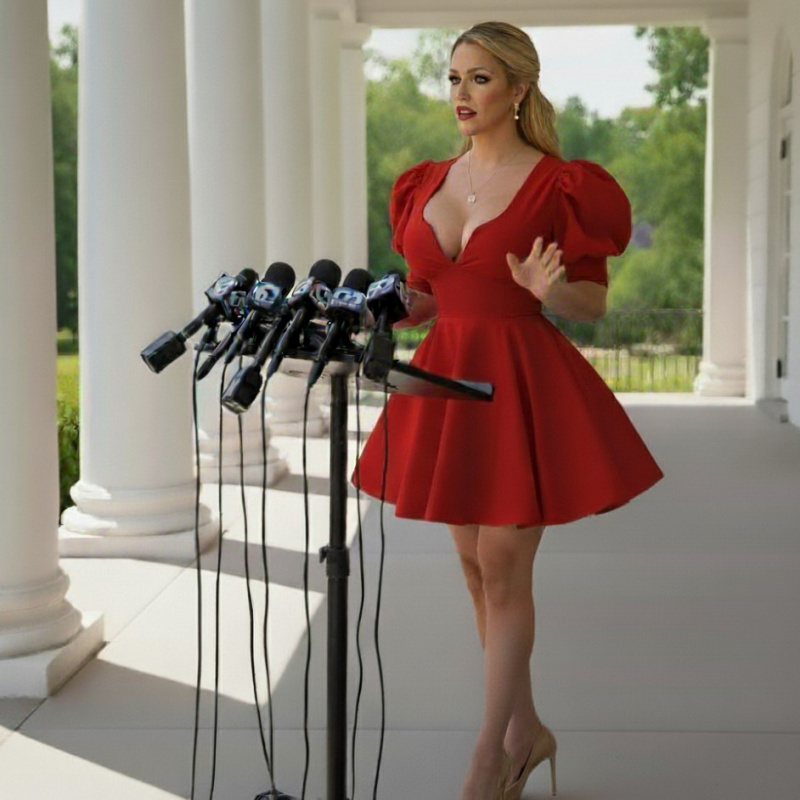
"Good morning, everyone," I began, settling into the rhythm that had become second nature. "Beautiful morning for celebrating America's birthday."
"Speaking of birthdays," called David Kim from Channel 12, "any chance the governor will give the state a running mate as a July 4th present?"
The question got chuckles, which was exactly the tone I preferred for defusing pressure about Beau's extended decision paralysis.
"I think the governor's more focused on giving voters good policy than good presents," I replied with a smile that felt painted on. "Though if anyone has suggestions for Mrs. Fenstemaker's birthday gift, I'm sure the governor would appreciate the help."
More laughter. Good. Three months of these interactions had taught me to use humor as a weapon for maintaining control while appearing approachable. The banter had developed naturally-playful deflection that demonstrated competence without revealing strategy. Reporters had learned to appreciate my skills even when they couldn't crack my message discipline.
"But seriously," I continued, "the governor's commitment to finding the right partner for this state's future means taking time to get it right. Better than rushing into something you'd regret later."
"Like a Vegas marriage," quipped Amy Rodriguez from the Herald.
"Exactly like a Vegas marriage, except with fewer Elvis impersonators," I agreed, which got more laughs and effectively defused the tension around timeline questions.
"Seriously though," pressed Amy, "it's been three months since the lieutenant governor's resignation. Voters deserve to know who will be on the ballot."
"They absolutely do," I agreed. "And when the governor has made his decision, you'll be among the first to know. He's not going to rush such an important choice just to meet an arbitrary timeline."
"What's taking so long?" This from Robert Nash, the Tribune's veteran political reporter who'd covered state politics since before I was born. "Sources suggest multiple candidates have been vetted and rejected."
The question was pointed but not hostile-Nash understood the realities of personnel decisions and could distinguish between legitimate inquiry and gotcha journalism.
"The governor has high standards," I said. "As he should when choosing someone who could potentially step into the state's highest office."
"High standards or impossible standards?" Nash followed up, but his tone remained conversational rather than accusatory.
"I'd say thorough vetting," I deflected with a practiced smile. "You know how it is, Robert-find the perfect candidate who can appeal to suburban women, urban professionals, rural voters, young families, and senior citizens, while having executive experience but not too much ambition, name recognition but no baggage, strong fundraising ability but no controversial donors. Simple, right?"
That got knowing chuckles from the veteran reporters who understood the impossible calculus of political partnerships.
"So you're saying it's complicated," Nash said dryly.
"I'm saying the governor takes his responsibilities seriously," I replied. "Now, who has questions about the infrastructure funding that's actually going to fix your commute once the legislature passes it?"
The briefing continued for another ten minutes, covering education policy, healthcare initiatives, and economic development projects I could discuss without revealing campaign strategy or internal deliberations. When it concluded, several reporters lingered for off-the-record conversations that had become as much relationship maintenance as information gathering.
"Nice work defusing the timeline questions," Nash commented as cameras were packed away. "But you know the story's becoming the process itself."
"I know," I admitted. "We're managing as best we can."
Nash nodded sympathetically. Politics was relationship business, and he understood the challenges of serving multiple constituencies with competing demands.
By eleven we were positioned along the parade route, where families had been claiming spots since dawn with lawn chairs, coolers, and elaborate flag decorations. I stood in heels on asphalt that was already radiating heat like a griddle, the red jersey clinging uncomfortably as summer humidity tested the limits of my antiperspirant.
Looking around me at the men sweating in their wool suits and ties, I had to admit that whatever else could be said about my transformation, a summer dress offered at least some practical advantages over the suffocating formality of masculine attire. At least I could breathe.
The constant vigilance required for maintaining feminine presentation in public spaces had become second nature, like a defensive reflex. Every step meant calculating heel placement on uneven surfaces, every movement meant managing fabric that could shift inappropriately, every weather change meant protecting an appearance that required more maintenance than a vintage sports car.
A summer breeze chose that moment to test the limits of modesty, catching the full skirt and lifting it dangerously high before I could press it down with careful discretion. Not before catching several appreciative glances from men in the crowd who looked like they were mentally taking photographs. This was the constant reality of my summer wardrobe-every weather condition became a potential wardrobe malfunction that could generate unwanted attention or viral humiliation.
The hormones had changed how I experienced these moments too. Where I once would have felt only irritation at the exposure, now there was a complex mix of embarrassment, awareness, and something uncomfortably close to satisfaction at the attention. The months of estrogen had rewired responses I'd thought were fixed aspects of my personality, turning me into someone who secretly enjoyed being looked at while publicly protesting the objectification.
"There's someone I want you to meet," Casey said, steering me toward the political livestock pen they called the VIP section.
The younger politicians clustered near the speakers' platform like well-dressed vultures picking over career opportunities. I recognized most of them-the usual suspects who showed up wherever cameras and donors converged. But the man Casey was dragging me toward moved differently. While the others worked the crowd with the desperate hunger of people who needed everything from everyone, he looked like someone who already had what he wanted.
Michael Rivera. An up-and-coming state legislator who had the media buzzing about higher office. Mid-thirties, tall enough that my ridiculous heels didn't make me tower over him, with the kind of easy competence that suggested actual substance beneath the political veneer. When Casey introduced us, he shook my hand like I was a colleague instead of campaign decoration, his eyes staying on my face instead of making the inevitable drift south to inspect Victoria's handiwork.
"Ms. Cross," he said, and something about his tone suggested he was talking to a person instead of a political curiosity. "I've been following your press conferences. Your policy knowledge is impressive."
The compliment blindsided me. When people mentioned my briefings, they usually gushed about my "courage" or "authenticity"-code that they'd been following the freakshow of my transformation. Rivera seemed more interested in what came out of my mouth than what I'd stuffed into my bra.
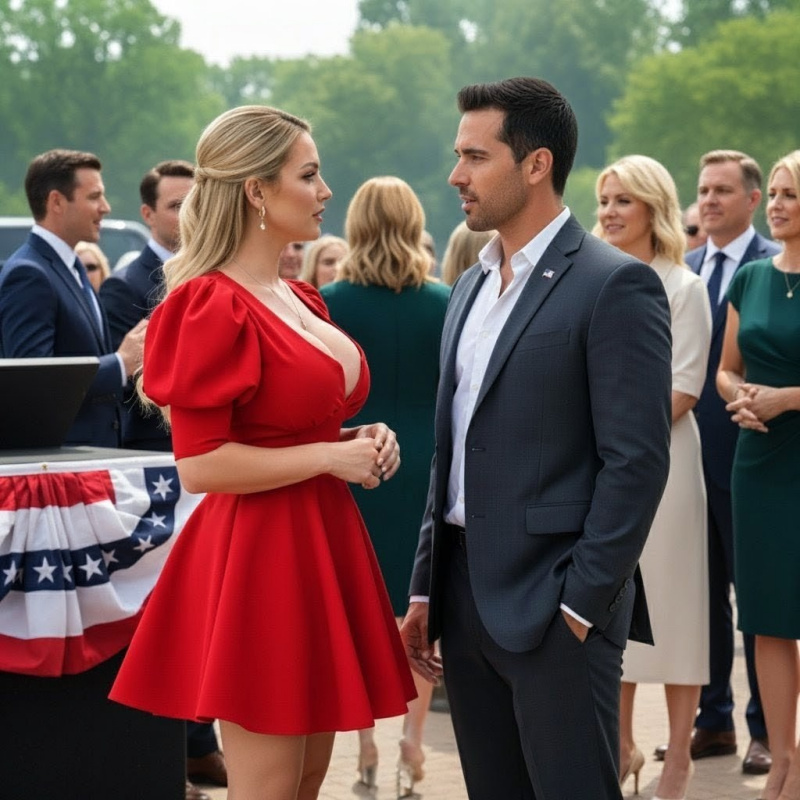
"Thank you," I said. "Though I suspect policy analysis isn't why most people are here today."
"Perhaps not," Rivera smiled, "but I've been working on education funding reform in the legislature. Your analysis of the formula calculations has been insightful."
He'd actually read my work. Not just press releases or talking points, but the actual white papers I'd written before becoming a living doll. When was the last time anyone had engaged with my brain instead of my biography?
"The formula's deliberately opaque," I said, eagerly falling into the kind of substantive discussion I'd been starved for. "Makes it harder for districts to game the system, but it also obscures where the real inequities lie."
"Exactly. And your recommendations about inflation adjustments could close most of the remaining loopholes without creating new administrative burdens."
We talked policy mechanics and legislative strategy while I felt something I'd almost forgotten-the pleasure of being intellectually valued. Rivera asked thoughtful questions, offered insights from his own experience, treated me like someone whose opinion mattered for reasons beyond my personal journey of self-discovery.
But underneath the professional respect, something else simmered. The way he listened was too focused, too attentive. Like he was memorizing details about me for reasons that had nothing to do with education funding. When I gestured, his eyes tracked the movement of my hands. When I laughed, he smiled like I'd given him something precious.
Casey watched our exchange with calculating attention, and I caught her studying Rivera's responses with the same focus she brought to polling data.
"You know, Michael," Casey interjected during a pause, "we've been looking for fresh perspectives on some of our major initiatives. Have you given any thought to broader executive involvement? The lieutenant governor position, perhaps?"
Rivera's expression didn't change, but something flickered behind his eyes-surprise or calculation, impossible to tell which.
"I appreciate the consideration," he said diplomatically, "but I'm committed to my current work in the legislature. There's still a lot I want to accomplish there."
The polite deflection of someone who'd been expecting the question.
"Of course," Casey said smoothly. "Though if you ever reconsider, you've got my number."
As Beau launched into his standard Fourth of July performance about America's endless promise, Rivera excused himself to work other sections of the crowd. I watched him move through conversations with the same natural ease, treating each handshake like it mattered.
But during Beau's speech, a familiar itch crawled up my spine-the sensation of being watched. Rivera had positioned himself across the viewing area with a clear sightline to our section. When I caught his eye, he didn't look away with the embarrassed guilt of someone caught staring. He held my gaze and smiled like we shared a secret.
The attention felt different from the casual objectification I'd grown used to over the past months. Men stared at the red dress and what it revealed, mentally cataloguing my parts like a shopping list. Rivera's focus was more... thorough. Like he was solving a puzzle that had me as the final piece.
When Beau finished his patriotic masturbation and the crowd began dispersing, Casey leaned close with that expression I'd learned meant trouble.
"Did you see that?" she asked.
"See what?"
"Rivera. Watching you like you were the most fascinating thing at this entire circus." Her voice carried suggestions that made my skin crawl. "He declined the lieutenant governor suggestion, but he's clearly interested in something."
I glanced back at Rivera, who was accepting congratulations from some county official while his eyes drifted back to me.
"Maybe he was just being polite about the policy discussion," I said, though the words tasted like lies.
"Maybe," Casey replied, though her expression suggested she believed otherwise. "Or maybe he needs different motivation than career advancement."
Something in her tone made me turn to face her.
"What are you thinking?" I asked, already dreading whatever fresh hell was about to emerge from Casey's tactical imagination.
"I'm thinking that you might need to have a more substantive conversation with him about the benefits of joining our team."
"Casey, I'm not going on a date with a man," I said, panic creeping into my voice. "I don't want to be set up with-"
"I'm not setting up a date," she cut me off. "This is about building professional relationships."
"Professional relationships?" The words came out sharper than I'd intended. "Then why does it feel like you're trying to pimp me out to the highest bidder?"
Something dark flashed across Casey's face, quick and dangerous. "Rivera's smart enough to know that dating a trans woman would be political suicide in his district."
Her bluntness felt like she'd slapped me. She was right, of course-any rising politician who valued his career wouldn't risk the scandal. But hearing it stated so clinically made me feel like damaged goods being appraised for market value.
Casey must have seen something in my expression because her tone shifted, becoming almost apologetic. "Look, even if Rivera was interested in you personally, I wouldn't share you. You're mine." She touched my cheek with unexpected gentleness. "But this is about using every advantage we have. If he respects your expertise, if he enjoys your company, that's leverage we can't afford to waste."
The casual way she claimed ownership should have been reassuring. Instead, it crystallized exactly how fucked I was. I'd become a political asset to be deployed wherever Casey saw fit. Like some arranged marriage where the bride's preferences were irrelevant compared to the strategic value of the union.
I looked across the crowd at Rivera, who was laughing at something while his eyes kept finding their way back to me. He seemed decent enough, someone who'd treated me with genuine respect. The thought of weaponizing that respect-whether professional or personal-made me feel like I would need a long shower afterward.
Rivera caught my eye again and smiled, and I couldn't tell if I was looking at my next political ally or my next victim.